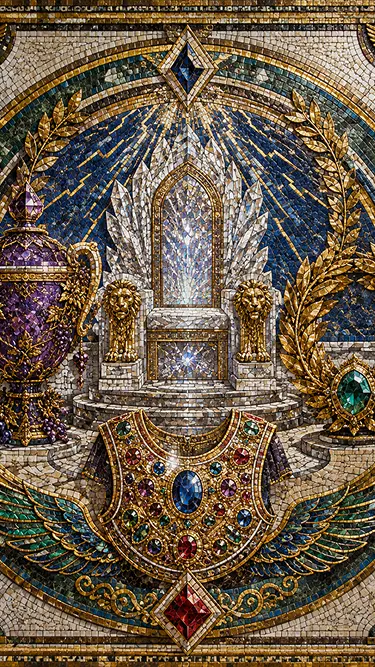
The Stones That Anchored Olympus
Long before gemstones were traded, cut, or catalogued, they were myth. Ancient Greek storytellers wove crystals and precious stones directly into the identities of their gods — a throne of crystal for Zeus, a diadem for Aphrodite, a stone born from the tears of a nymph for Dionysus. These weren't decorative details; they were symbols of power, permanence, and divine order. CrystalAnchor is a quiet, ad-free archive exploring how gemstones became woven into the regalia of the Olympian pantheon, and how that symbolism carried through art and costume for centuries afterward.
What You'll Find Here
The Nymph Who Became a Stone
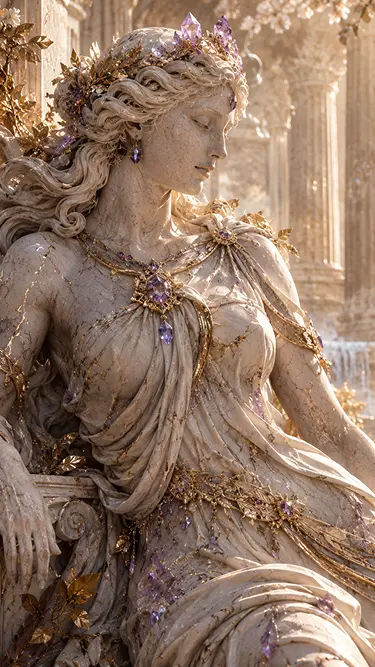
Few gem myths are as well known as the origin of amethyst. According to legend, Dionysus, god of wine, pursued a mortal named Amethystos, who prayed to the goddess Artemis for protection. Artemis transformed her into a pillar of clear quartz to shield her from harm. Remorseful, Dionysus poured wine over the stone as an offering, staining it the deep violet color amethyst is known for today. The Greeks believed wearing amethyst could prevent intoxication — a direct echo of this myth — and the stone became closely tied to themes of restraint, clarity, and protection against excess.
Zeus and the Crystal Throne
Clear Stone, Absolute Authority
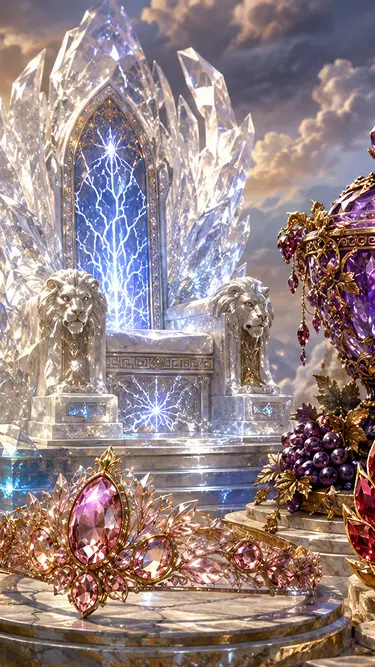
In classical descriptions and later artistic tradition, Zeus is frequently associated with rock crystal — clear quartz believed by ancient Greeks to be water frozen so completely by the gods that it could never melt again. This permanence made crystal a natural symbol for Zeus's unshakable authority as ruler of Olympus. Depictions of his throne in later European art often emphasize this clarity and hardness, visually reinforcing the idea of a rule that cannot be dissolved or corrupted — stone as a metaphor for eternal order.
Aphrodite's Diadem
Pearl, Adornment, and the Sea
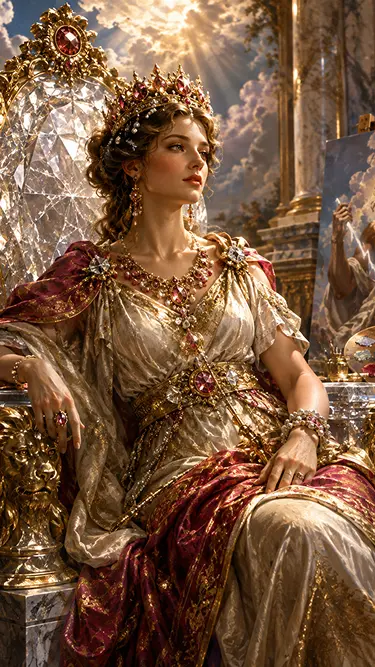
Aphrodite, born from sea foam according to Hesiod's account, is consistently linked in art to pearls and sea-born stones — materials that emerge from water much as she herself did. Her diadem, frequently depicted in classical sculpture and later Renaissance painting, became a visual shorthand for beauty, femininity, and divine allure. Unlike the hard permanence associated with Zeus, Aphrodite's regalia emphasizes luminosity and softness — pearl's subtle glow standing in for charm rather than raw power.
Other Olympians and Their Stones
A Pantheon of Gems
Beyond Zeus, Aphrodite, and Dionysus, other Olympians carry their own stone associations in myth and later tradition: Athena is linked to olive-green stones echoing her sacred tree; Apollo, god of light and prophecy, is tied to sunstone and topaz for their golden glow; Poseidon's regalia often features aquamarine and coral, evoking the sea he rules; Hades, lord of the underworld, is associated with obsidian and onyx — dark stones formed from volcanic and mineral depths. This section catalogs these lesser-discussed pairings and their mythological roots.
Divine Regalia in Art
How Artists Rendered the Gods' Stones
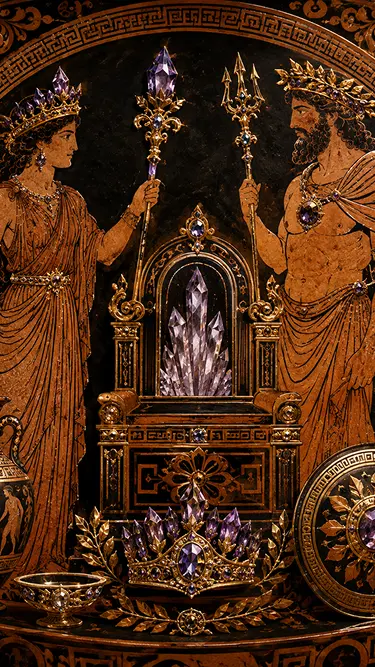
From Greek vase painting to Roman mosaics to Renaissance oil portraits, artists faced a recurring challenge: how do you paint a god's power? Gemstones became one answer. Painters and sculptors used crystal, pearl, and colored stone — real or implied — in crowns, thrones, and jewelry to instantly signal divinity and rank to a viewer. This section looks at specific artistic traditions and how the depiction of "divine gemstones" evolved from symbolic simplicity in antiquity to elaborate ornamentation in later European art.
Why Stones Became Symbols
The Logic Behind the Myths
Why did ancient Greeks reach for gemstones specifically when describing their gods? Stones are permanent, rare, and visually striking — qualities that mirrored how the Greeks conceived of divinity itself: eternal, elevated above mortal concerns, and inherently valuable. Unlike perishable materials, a crystal or gem could represent something that does not decay, making it a natural "anchor" for stories about beings who were themselves considered unchanging and eternal.